Resident & Family Engagement: The Modern Family Portal Playbook
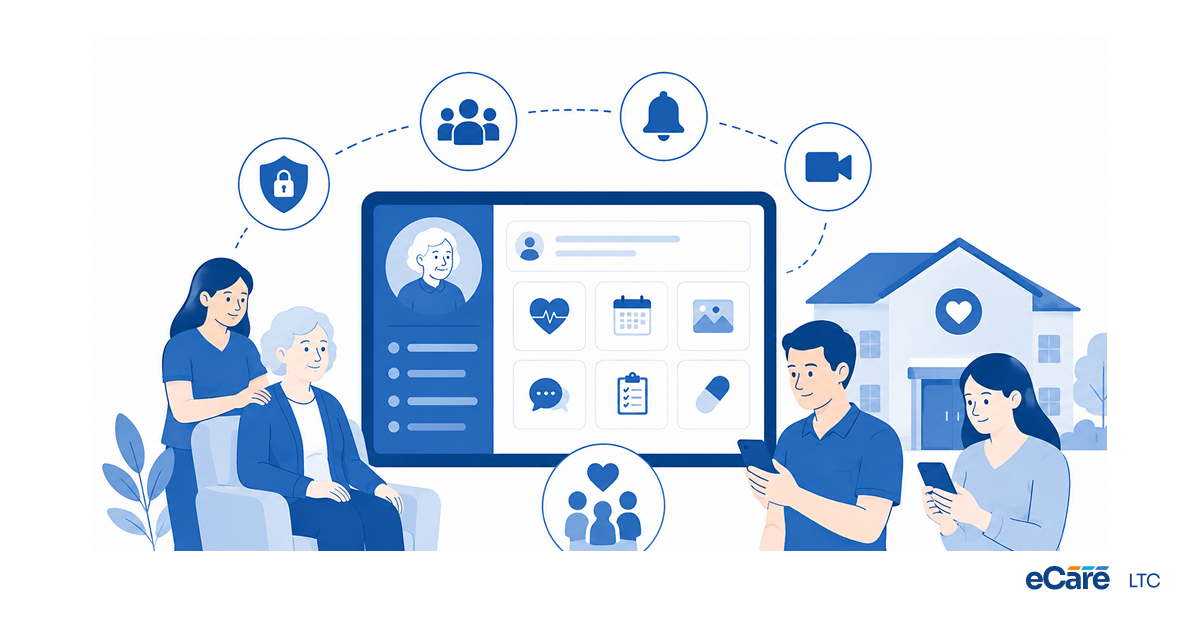
A missed family update in long-term care doesn’t stay small for long—it turns into a phone call, then another, then a complaint.
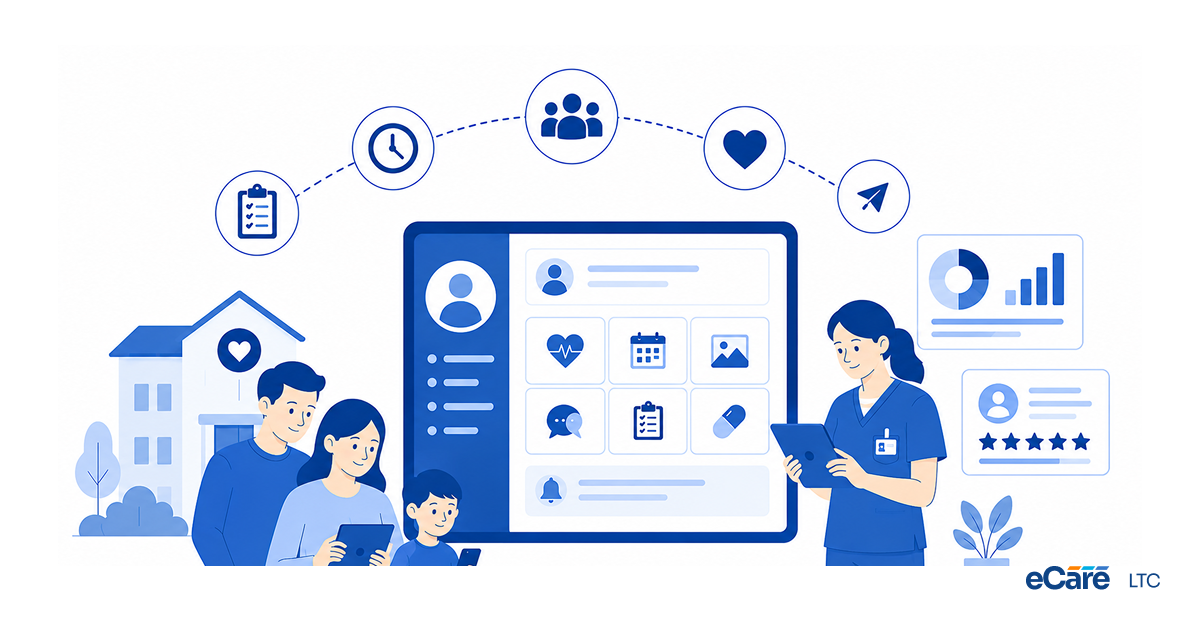
This is a daily reality for many SNFs and assisted living facilities. Staff try to keep families informed, but updates are scattered across systems, conversations, and shift changes. There is rarely a single, reliable place where families can see what’s happening in real time.
The results are predictable. Families can feel uncertain, staff can feel interrupted, and communication can slowly become one of the most time-consuming parts of the job. The reason behind this is not just care, but also how information is shared.
Now, families are comparing their experience inside care facilities with the visibility level they get in other services. For example, instant updates, clear status, and less dependence on follow-ups.
This gap between expectation and reality is exactly where family engagement systems are being rethought. Not as an add-on feature, but as part of the core workflow that keeps care teams and families aligned.
Let’s explore how modern family portals are addressing that gap and what operators need to get right to make engagement actually work in real-world settings.
The new family experience baseline
When we look at the new family experience baseline through the lens of long-term care facilities, SNFs, and assisted living, the picture is more nuanced than the marketplace conversation suggests. Most teams approach this as a tooling question, but the leaders we work with treat it as a workflow design question first and a tooling question second. The difference shows up in deployment velocity, in user adoption curves, and ultimately in the durability of the gains six and twelve months out from go-live.
The practical framework starts with a sharp baseline. Before any eCareLTC capability is introduced, the team needs to agree on three numbers: where they are today, where they want to be in 90 days, and where they want to be in 12 months. Without those three numbers documented at the start, every subsequent decision becomes a debate about taste rather than a decision against a target. Teams that skip this step typically spend the first quarter relearning what they should have agreed on at the kickoff.
In practice, what this looks like is a structured pilot of 30 to 60 days with a small team that represents the diversity of the broader organization. Choose pilot participants who include at least one skeptic — the skeptic's feedback is more valuable than three enthusiasts combined, because the skeptic surfaces the friction that enthusiasts power through and that everyone else will trip over at scale. Capture quantitative metrics weekly and run a structured retrospective at week 4 to feed the configuration back into the deployment plan.
Two mistakes to avoid. First, do not confuse activity with progress: the number of users onboarded is not the same as the number of users who have changed their workflow. Second, do not optimize for the wrong number: it is easy to celebrate adoption metrics while the underlying outcome metrics (revenue, satisfaction, retention, time saved) stay flat. The teams that report the strongest results twelve months out are the ones that set their dashboards on outcomes from day one and watched those numbers weekly.
What family portals must do (and not do)
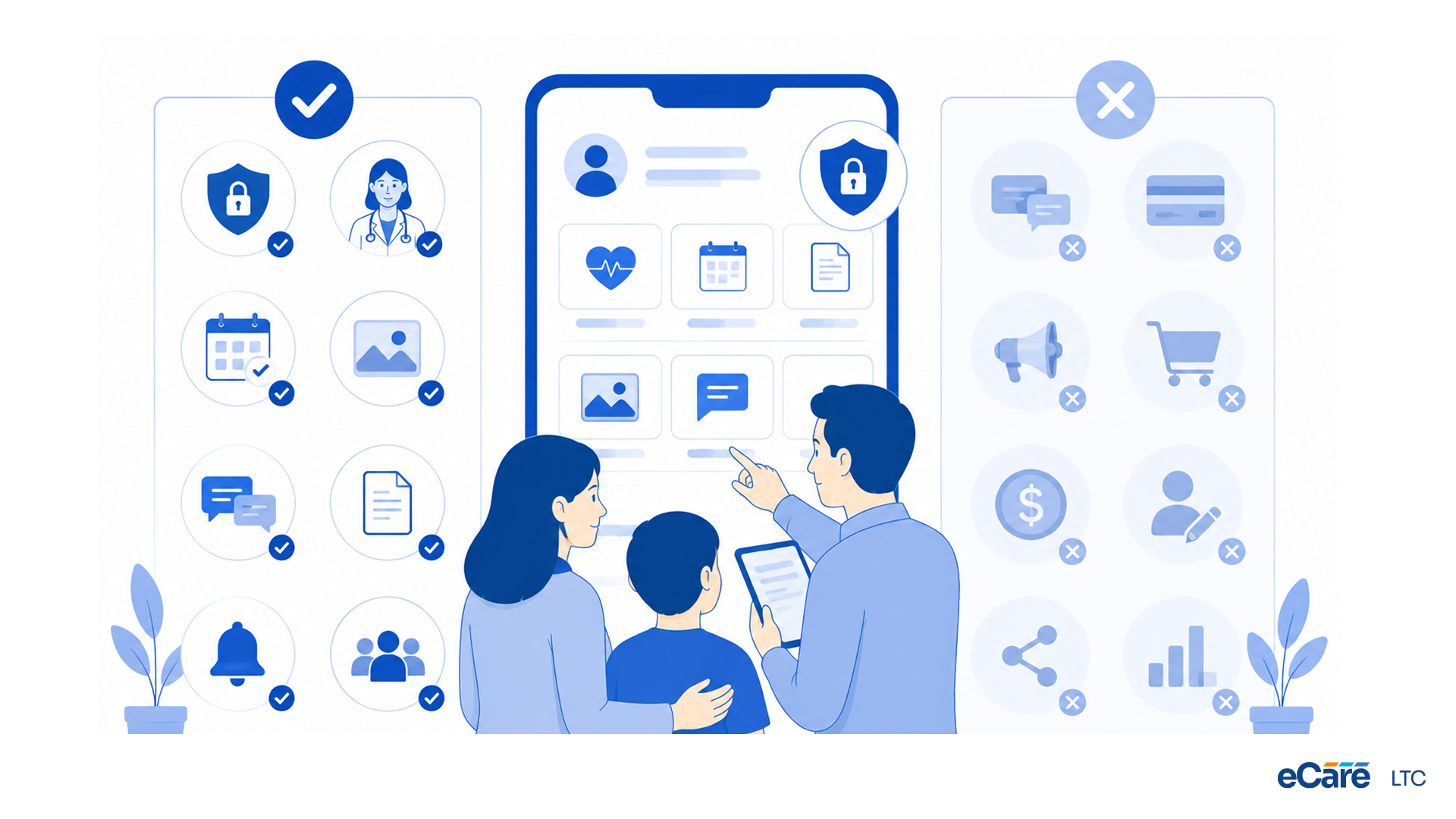
When we look at what family portals must do (and not do) through the lens of long-term care facilities, SNFs, and assisted living, the picture is more nuanced than the marketplace conversation suggests. Most teams approach this as a tooling question, but the leaders we work with treat it as a workflow design question first and a tooling question second. The difference shows up in deployment velocity, in user adoption curves, and ultimately in the durability of the gains six and twelve months out from go-live.
The practical framework starts with a sharp baseline. Before any eCareLTC capability is introduced, the team needs to agree on three numbers: where they are today, where they want to be in 90 days, and where they want to be in 12 months. Without those three numbers documented at the start, every subsequent decision becomes a debate about taste rather than a decision against a target. Teams that skip this step typically spend the first quarter relearning what they should have agreed on at the kickoff.
In practice, what this looks like is a structured pilot of 30 to 60 days with a small team that represents the diversity of the broader organization. Choose pilot participants who include at least one skeptic — the skeptic's feedback is more valuable than three enthusiasts combined, because the skeptic surfaces the friction that enthusiasts power through and that everyone else will trip over at scale. Capture quantitative metrics weekly and run a structured retrospective at week 4 to feed the configuration back into the deployment plan.
Two mistakes to avoid. First, do not confuse activity with progress: the number of users onboarded is not the same as the number of users who have changed their workflow. Second, do not optimize for the wrong number: it is easy to celebrate adoption metrics while the underlying outcome metrics (revenue, satisfaction, retention, time saved) stay flat. The teams that report the strongest results twelve months out are the ones that set their dashboards on outcomes from day one and watched those numbers weekly.
Privacy + consent across multi-decision-maker families
When we look at privacy + consent across multi-decision-maker families through the lens of long-term care facilities, SNFs, and assisted living, the picture is more nuanced than the marketplace conversation suggests. Most teams approach this as a tooling question, but the leaders we work with treat it as a workflow design question first and a tooling question second. The difference shows up in deployment velocity, in user adoption curves, and ultimately in the durability of the gains six and twelve months out from go-live.
The practical framework starts with a sharp baseline. Before any eCareLTC capability is introduced, the team needs to agree on three numbers: where they are today, where they want to be in 90 days, and where they want to be in 12 months. Without those three numbers documented at the start, every subsequent decision becomes a debate about taste rather than a decision against a target. Teams that skip this step typically spend the first quarter relearning what they should have agreed on at the kickoff.
In practice, what this looks like is a structured pilot of 30 to 60 days with a small team that represents the diversity of the broader organization. Choose pilot participants who include at least one skeptic — the skeptic's feedback is more valuable than three enthusiasts combined, because the skeptic surfaces the friction that enthusiasts power through and that everyone else will trip over at scale. Capture quantitative metrics weekly and run a structured retrospective at week 4 to feed the configuration back into the deployment plan.
Two mistakes to avoid. First, do not confuse activity with progress: the number of users onboarded is not the same as the number of users who have changed their workflow. Second, do not optimize for the wrong number: it is easy to celebrate adoption metrics while the underlying outcome metrics (revenue, satisfaction, retention, time saved) stay flat. The teams that report the strongest results twelve months out are the ones that set their dashboards on outcomes from day one and watched those numbers weekly.
Measuring engagement that matters to family

When we look at measuring engagement that matters to families through the lens of long-term care facilities, SNFs, and assisted living, the picture is more nuanced than the marketplace conversation suggests. Most teams approach this as a tooling question, but the leaders we work with treat it as a workflow design question first and a tooling question second. The difference shows up in deployment velocity, in user adoption curves, and ultimately in the durability of the gains six and twelve months out from go-live.
The practical framework starts with a sharp baseline. Before any eCareLTC capability is introduced, the team needs to agree on three numbers: where they are today, where they want to be in 90 days, and where they want to be in 12 months. Without those three numbers documented at the start, every subsequent decision becomes a debate about taste rather than a decision against a target. Teams that skip this step typically spend the first quarter relearning what they should have agreed on at the kickoff.
In practice, what this looks like is a structured pilot of 30 to 60 days with a small team that represents the diversity of the broader organization. Choose pilot participants who include at least one skeptic — the skeptic's feedback is more valuable than three enthusiasts combined, because the skeptic surfaces the friction that enthusiasts power through and that everyone else will trip over at scale. Capture quantitative metrics weekly and run a structured retrospective at week 4 to feed the configuration back into the deployment plan.
Two mistakes to avoid. First, do not confuse activity with progress: the number of users onboarded is not the same as the number of users who have changed their workflow. Second, do not optimize for the wrong number: it is easy to celebrate adoption metrics while the underlying outcome metrics (revenue, satisfaction, retention, time saved) stay flat. The teams that report the strongest results twelve months out are the ones that set their dashboards on outcomes from day one and watched those numbers weekly.
Case studies in family-driven outcomes
When we look at case studies in family-driven outcomes through the lens of long-term care facilities, SNFs, and assisted living, the picture is more nuanced than the marketplace conversation suggests. Most teams approach this as a tooling question, but the leaders we work with treat it as a workflow design question first and a tooling question second. The difference shows up in deployment velocity, in user adoption curves, and ultimately in the durability of the gains six and twelve months out from go-live.
The practical framework starts with a sharp baseline. Before any eCareLTC capability is introduced, the team needs to agree on three numbers: where they are today, where they want to be in 90 days, and where they want to be in 12 months. Without those three numbers documented at the start, every subsequent decision becomes a debate about taste rather than a decision against a target. Teams that skip this step typically spend the first quarter relearning what they should have agreed on at the kickoff.
In practice, what this looks like is a structured pilot of 30 to 60 days with a small team that represents the diversity of the broader organization. Choose pilot participants who include at least one skeptic — the skeptic's feedback is more valuable than three enthusiasts combined, because the skeptic surfaces the friction that enthusiasts power through and that everyone else will trip over at scale. Capture quantitative metrics weekly and run a structured retrospective at week 4 to feed the configuration back into the deployment plan.
If your team takes one thing from this section, take this: the measurement cadence matters more than the measurement choice. Weekly cadence with a forgiving metric beats quarterly cadence with a perfect metric every time. Tighter feedback loops compound. Set the rhythm at the start of the deployment, protect it through the first 12 weeks, and the rest of the playbook does most of its own work.
Conclusion
Family engagement in SNFs is no longer about occasional updates—it’s about continuous visibility. When communication is fragmented, families lose trust and staff lose time managing repeated queries.
Modern family portals solve this by making updates consistent, accessible, and part of the daily workflow instead of an extra task. Platforms like eCareLTC help centralize communication so families stay informed without increasing staff workload.
When information flows clearly, both sides benefit—families feel reassured, and care teams stay focused on care instead of constant follow-ups.
Frequently Asked Questions
How long does a typical eCareLTC deployment take?
For most long-term care facilities, SNFs, and assisted living, a sensible first deployment runs 30 to 60 days from kickoff to first measurable result. The variables that move that timeline are the depth of integration required, the breadth of pilot users in week one, and the cadence of configuration review.
What is the realistic ROI window?
The earliest meaningful ROI signal is at day 30 to 45 — typically a workflow time metric that moves first. The financial ROI signal usually appears between month 3 and month 6, depending on which baseline KPIs you set at kickoff.
How does eCareLTC handle change management?
The change management problem is rarely about the tooling, it is about workflow design. eCareLTC deployments succeed when the leadership team owns the workflow change story and the vendor team owns the configuration.
What integration depth does eCareLTC require?
Most long-term care facilities, SNFs, and assisted living run a heterogeneous stack assembled over many years. eCareLTC integrates at the depth required by each system and exposes structured APIs for downstream tooling.
How do I evaluate eCareLTC against alternatives?
Score each vendor on five axes: workflow fit, integration depth, configuration flexibility, support quality, and pricing transparency. Insist on a 30-day live pilot before signing a multi-year commitment.